
All Insights
13.05.26
How does the CEO look at Quality and Impact of Hire?
“Hire less, but hire better” has become a huge theme in recent years.
Have we overcomplicated measuring quality and impact of hire for too long though?
Would a CEO care whether someone was hired in 28 days or 33?
Unlikley top of the list of metrics. They want confidence that each hire moves the company forwards.
Share
- Share on LinkedIn
- Share on Twitter
- Copy link Copied to clipboard
Ideas
Impact of Hire,
Quality of Hire
Currently Reading

How does the CEO look at Quality and Impact of Hire?
Quality and Impact of Hire.
How does a CEO think about this?
Date: 13th May, 2026 location: foundation medicine, 400 Summer Street, Boston, MA 02210
Event Summary
You can debate leading and lagging indicators all you like… and the semantics of measurement.
What we all fundamentally need is 3 things:
- a way to measure and understand, early, whether we are hiring great people
- a way to measure in the longer run what specifically makes up super high performers in our orgs. Bar raisers. Culture add.
- a repeatable way for this insight to feed into our workforce planning, hiring strategy and process (headhunting, JDs, scorecards etc)
To elevate the perception of the people function, we must consider what the CEO / board cares about?
This stuff isn’t always straight forward, though. It’s been described as the “holy grail” by some.
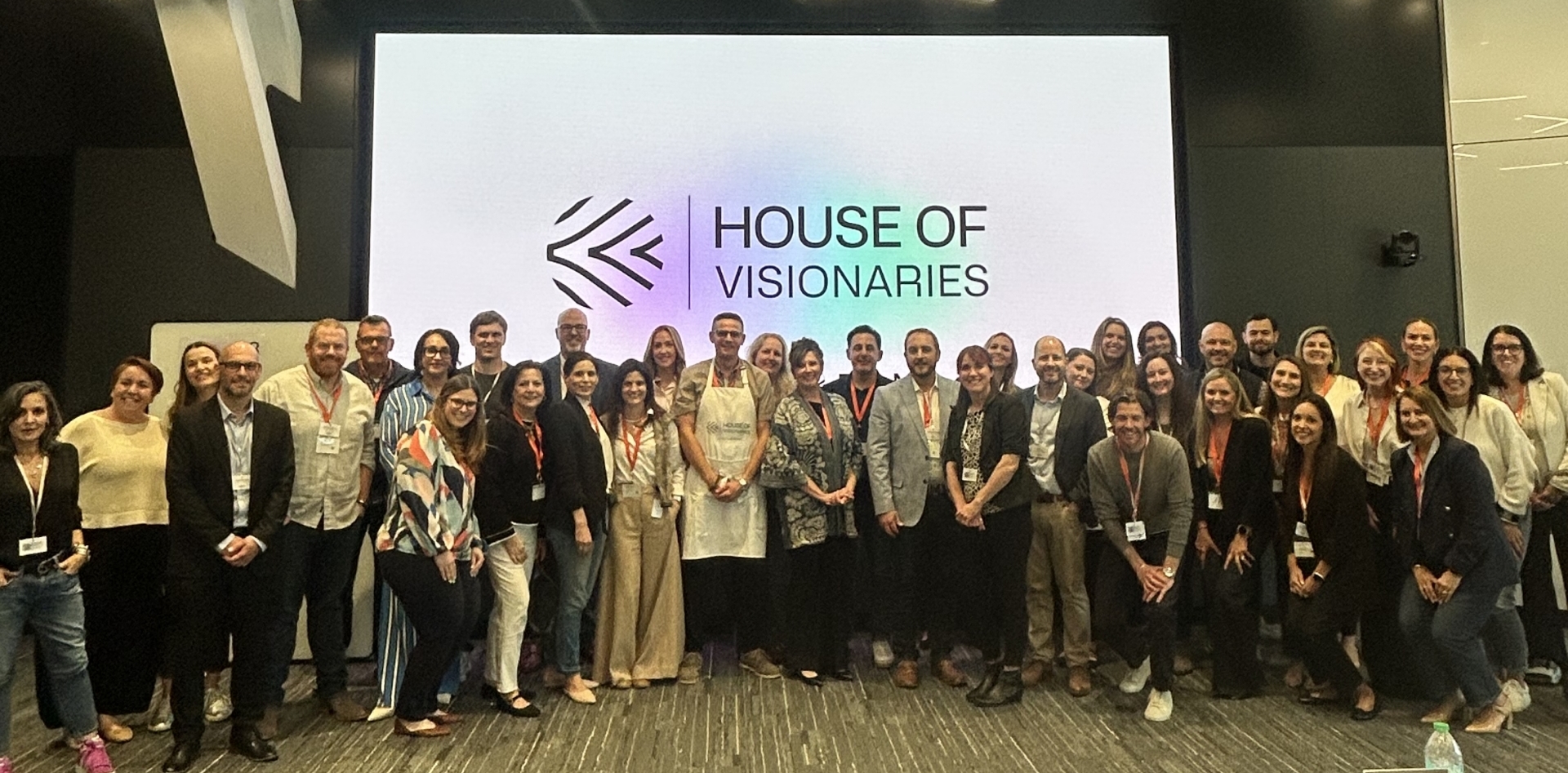
50+ senior leaders in the community came together to explore some beautifully simple measurement frameworks and then hear about + co-design some more complex ones.
Keeping it simple!
Up top Ben Rutter shared his journey on this subject over the last 2 years.
His observation is that we are overcomplicating it. Trying to be clever. Trying to look for perfection.
He shared 2 beautifully simple metric concepts. Ones which could be implemented today! In any business!
Validated by a working group of CPOs in Boston + what we use at Bond Global to ensure our talent partners deliver to “world class is our only standard”.
Concept 1 – Quality of Hire NPS Score

Based on asking hiring managers one simple Q “would you hire this person again?”.
That HM survey we think would happen at 6 months. It can be whatever point in time makes most sense to you though.
This NPS 0 – 10 score is very familiar:
1 – 3, would be a hard no. The hire has possibly already left the business or is under performance management. Collaborative scrutiny of why needed. Learnings factored back into process.
4 – 5, would be a maybe. You need to consider whether this was a mis-hire or if there are reasons it’s not a simple yes!
7 – 9, would be a yes. You’d definitely hire this person again and TA have smashed it.
10, would be a hell yeah. This person is a bar raiser and we need to learn more about what makes up folk like this and feed that into our process.
Why is this so cool?
– TA are in control of the data
– This could be rolled out tomorrow, with a small bit of HM education/training
– In theory this could be an industry standard
Imagine walking into an interview process or new job as a Head of TA and the conversation might go like this. So how many hires did we do last year, 400, OK cool. What’s our QoH NPS? It’s 7 right now, “we’re in the blue zone”.
We would instantly know how much work there was to be done.
Concept 2 – Impact of Hire

Bar raisers, talent density. All big buzz words right now.
But in short what people are saying is are we hiring people that have impact and make us better than we are right now.
In this simple methodology you take the average performance score of thew new hires and divide that by the average of the current hires.
This will give you an impact score i.e are we bringing in better talent than we did say a year ago, 2 years ago.
Whatever performance scoring rubric you use and how ever frequently this is conducted the simple methodology works.
There is significant scope to tailor this simple model to your business by defining what new and current means.
There are some potential pitfalls:
1) If you operate on a “partially met / met / exceed” or similar you might have 80% sit in the middle category. Making it hard to differentiate. However, if that’s the case you could run this as a % of exceeds in the new vs the current workforce as a similarly simple temperature check.
2) With all of this there is the potential for bias. Some managers scoring highly to make sure it doesn’t look bad on them. Effective training and the creation of psychological safety will mitigate this.
How to think like a CEO?
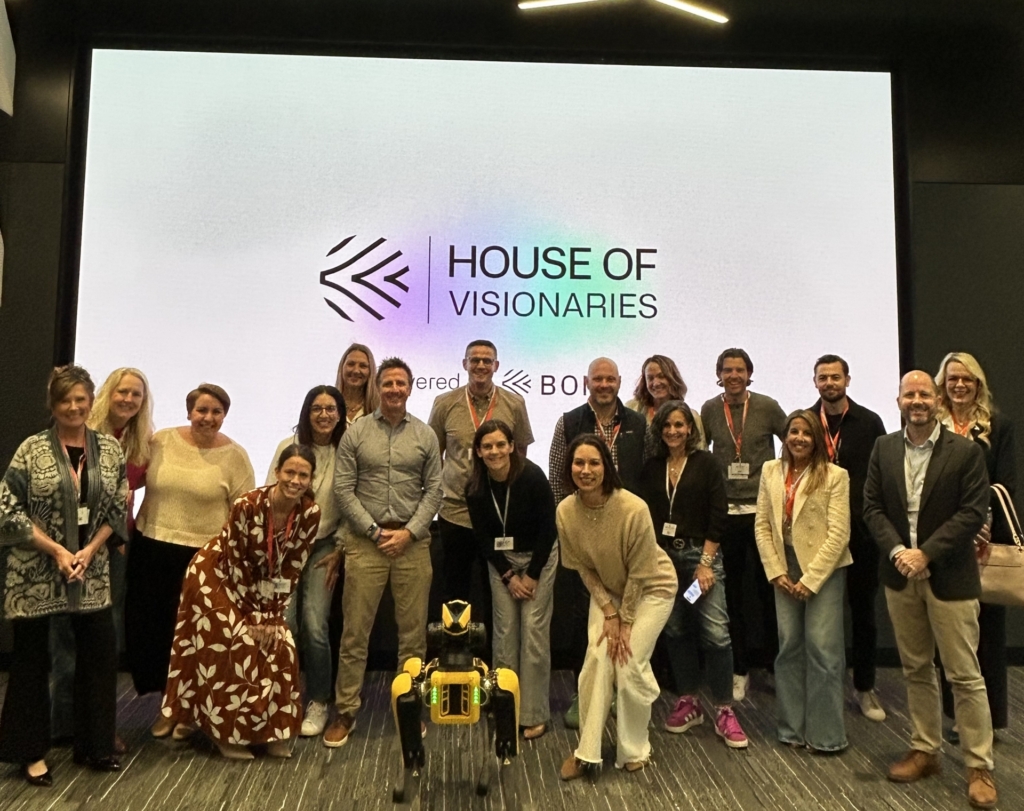
The morning CPO session focused in around where historically the people function may have been at odds with the CEO/board when it comes to measuring quality and impact of hire.
We were honest that we have been stuck in a place that is safe and what we have always done.
For example. In TA we will track time to hire. Why. Because we have always done that and its easy.
But, if you asked the CEO what do they really care about when hiring, we’d bet that if it’s 28 days or 33days, that would rank pretty low.
What do they really want to know?
What does their board want to know?
What does real impact look like?
Have you asked?
Do you know?
Most CEO’s, whether they vocalise it or not, want exceptional new hires into the business and they want those people to have tangible incremental impact on the orgs goals and the bottom line. They want people who increase velocity, open up new markets and transform the status quo.
If your CEO asked you to demonstrate Quality & Impact tomorrow in data could you?
Not easy. But don’t second-guess.
Interview the board and establish what really matters!
Resident Spotlights
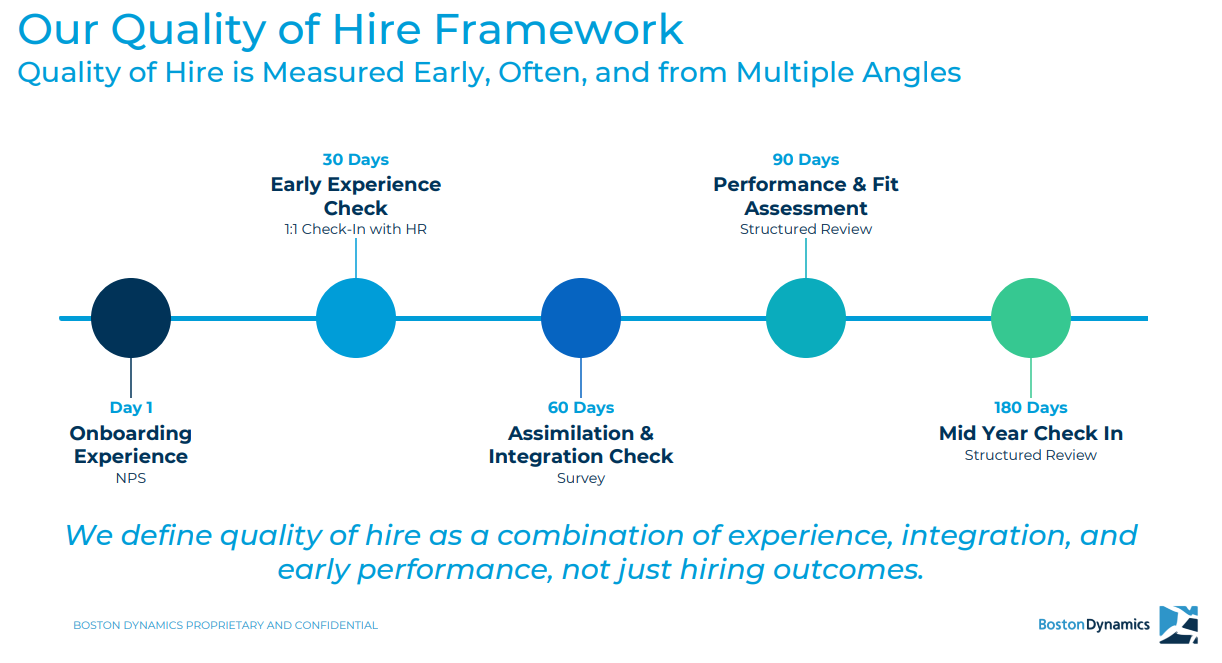
First up we had Rachel Salamone, Chief People Officer @ Boston Dynamics.
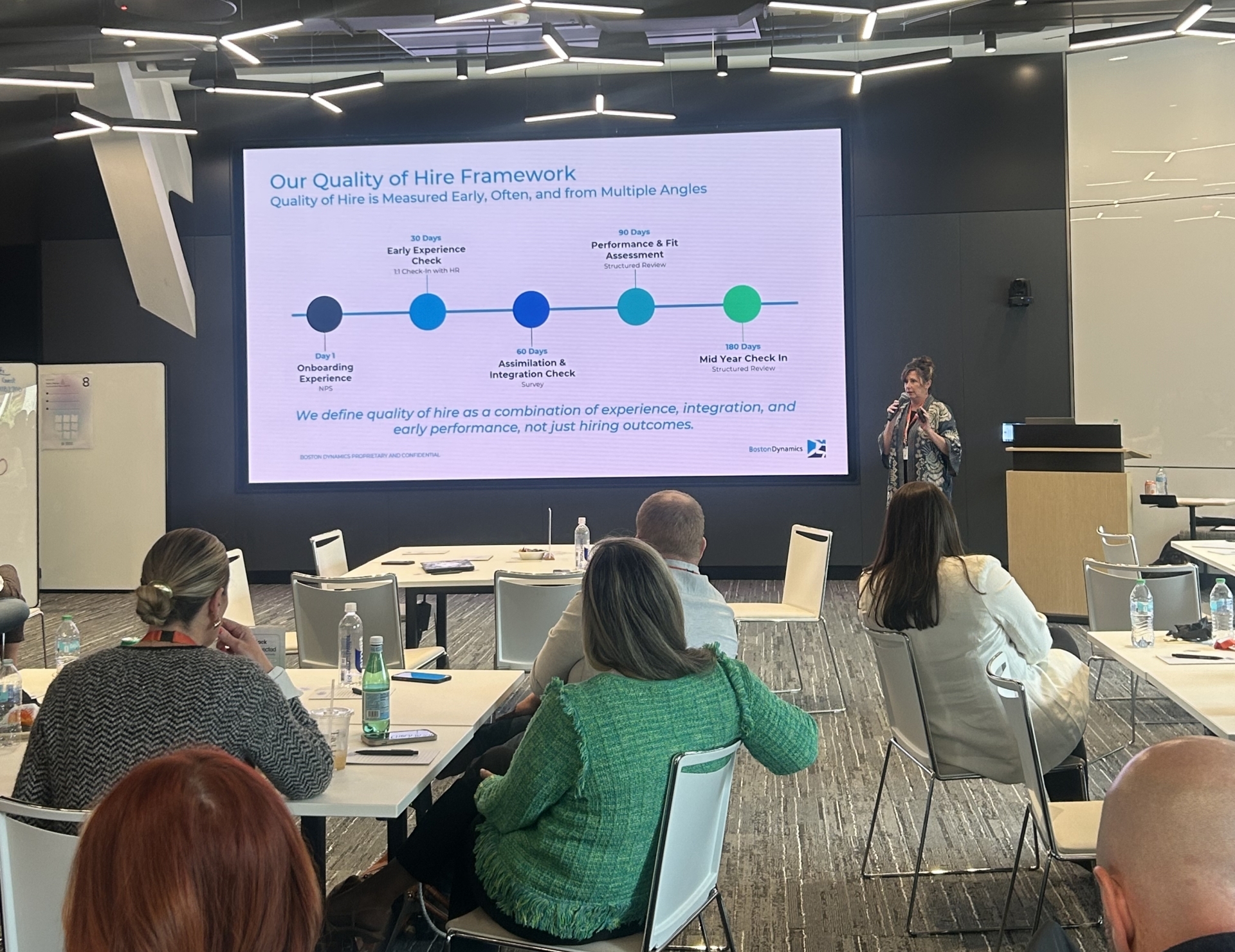
Rachel shared how Boston Dynamics measure quality of hire.
Early, often and from multiple angles.
They define quality of hire as a combination of experience, integration, and early performance, not just hiring outcomes!
Starting with an NPS onboarding experience survey on Day 1 and following that up with 30, 60, 90 and 180 day touch points.
They treat early signals as leading indicators of retention and performance risk.
Next up up we had Katie Kulikoski, Chief People Officer & Stephanie Steele, Director of TA Programs @ Rapid7
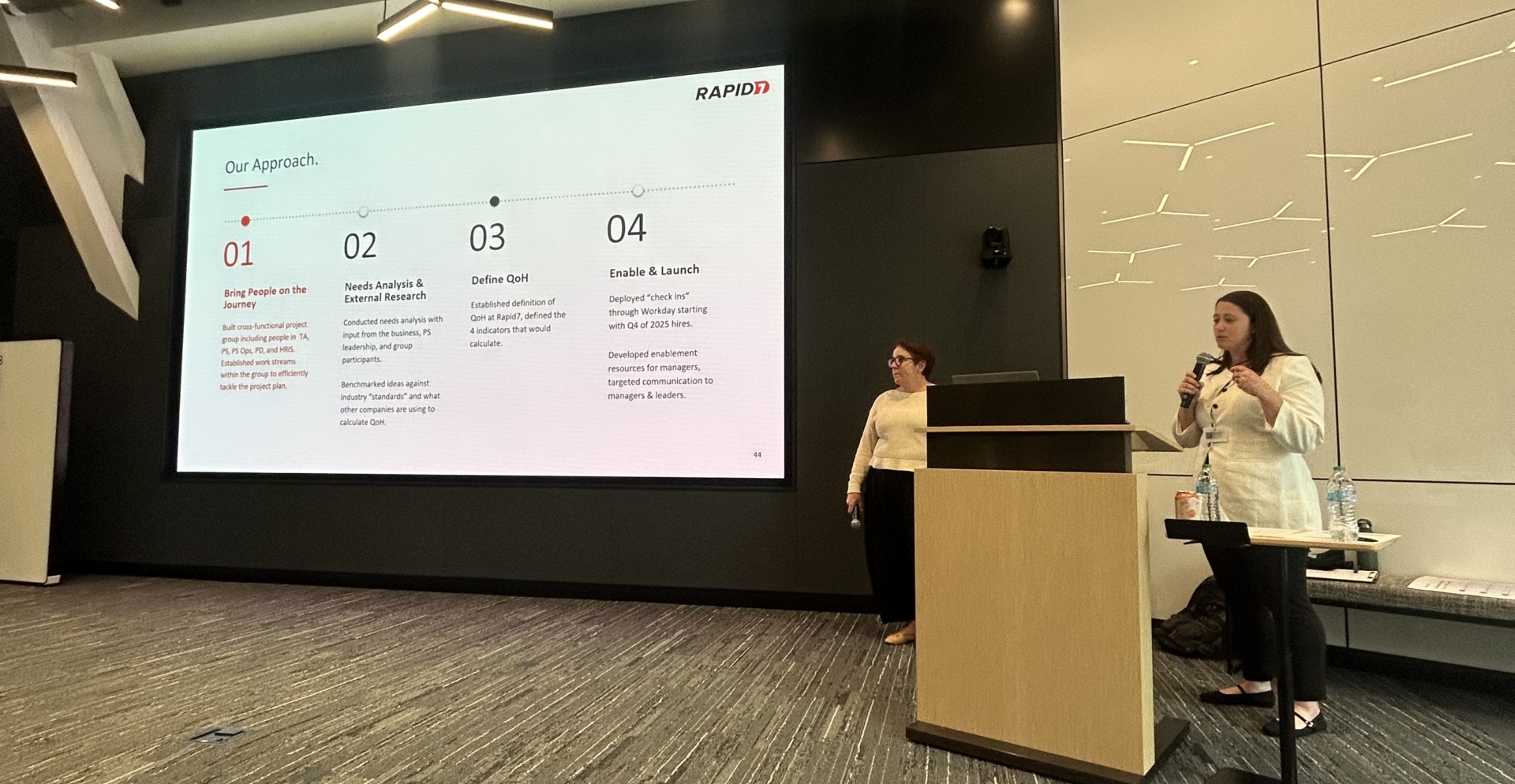
Katie framed what quality of hire means at Rapid7 and shared the rigour behind the thinking.
It evaluates the effectiveness of their talent lifecycle!
Steph went on to share how they approached the project from engagement, through defining it, and then launching it.
A balanced scorecard of manager insights is captured at 6 months and 1 year (aligned to company, craft and culture). This is pulled together with rehire surveys and retention metrics to produce their quality metric.

The “Great British Metric Bake Off”
Things then got competitive as senior leaders co-baked new, quality and impact of hire metrics. Thinking about what the CEO/board would care about throughout.
Bakers created their perfect 3-ingredient cakes for QoH and IoH. Leaders pitched their ideas to other groups. 8 bakes became 4, before the room voted on the best bake.
All in pursuit of the coveted Ryan “O’Hara Handshake” and HOV wooden spoons.

A full write up of those recipes and the insights can be found here
Gain further inspiration
Co-created content from the HOV community.
This free smoke consists of inspiring podcasts, insights and tools to help you level up the game in TA and HR
We want to build a small but powerful community!
Refer someone great with below link