All Insights
10.02.26
10x the 10x’ers with AI
2026 will be the year that conversation morphs from "it's all about adoption" towards "where's the ROI?".
With progress being slow to date... should we just 10x the 10xers with AI?
Share
- Share on LinkedIn
- Share on Twitter
- Copy link Copied to clipboard
Ideas
AI strategy,
House of Visionaries,
People strategy

Currently Reading

10x the 10x’ers with AI
Do we just 10x the 10x’ers with AI?
Date: february 10, 2026
location: Forward Financing – 53 State St 20th Floor, Boston
Event Summary
We are not saying this is right or wrong but, as always, will challenge the room.
Have we got this AI adoption piece wrong? Is this why ROI has been so elusive?
– – – – – – – – – – – – – – – – – – – – – – – – – – – – – – – – – – – – – – – – – – – – – – – – –
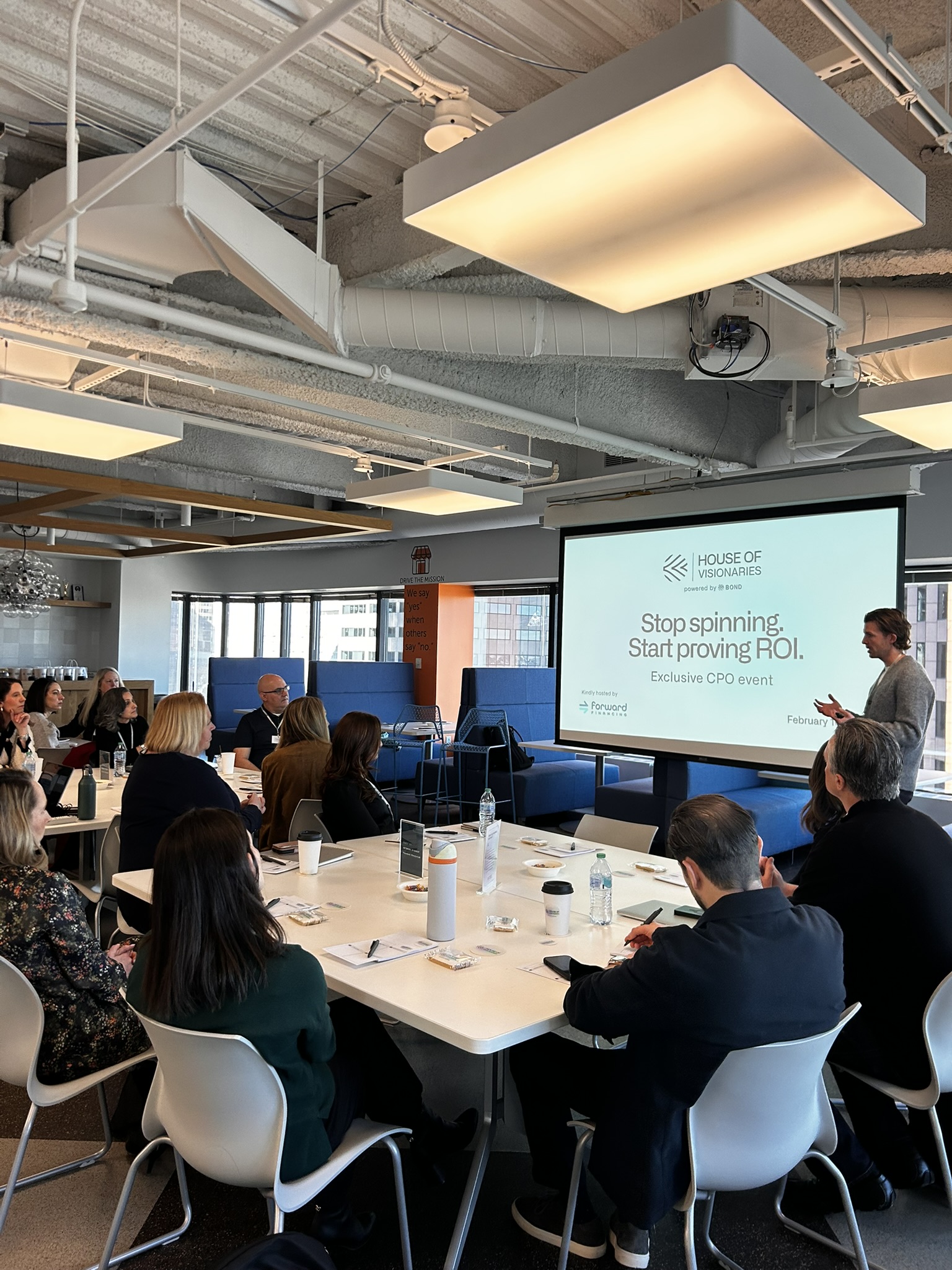
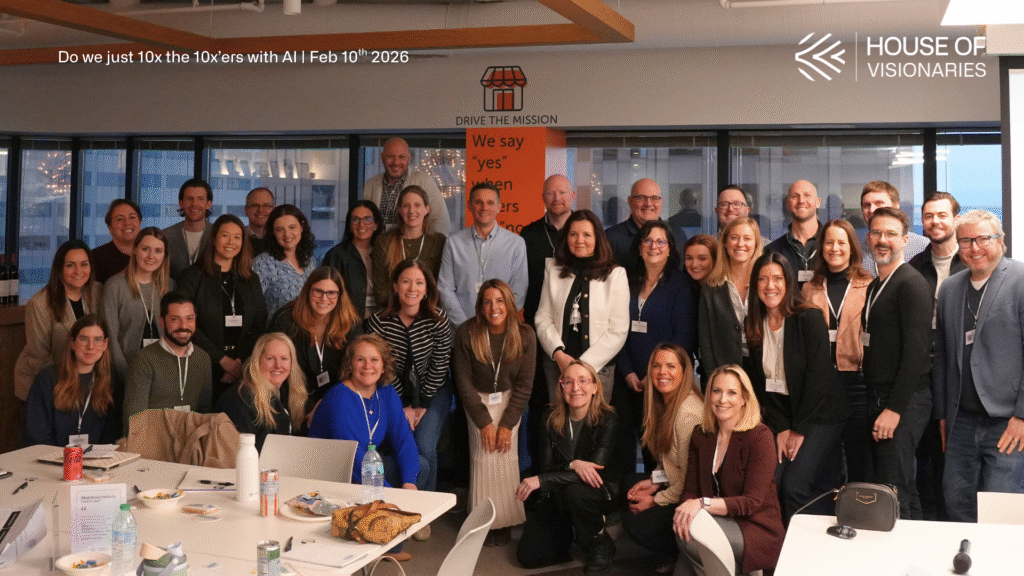
An exclusive group of Boston’s top senior people function leaders assembled to tackle this conundrum together. Sharing what’s working and what’s not along the way.
We talked about making some bets, taking some calculated risks and asked “where are you placing your chips?”
In preparation for the event we captured insights from 40+ senior leaders on how they thought about and were approaching this AI transformation. Check it out!
Only 11% of residents have a dedicated budget & 44%, described their adoption approach as “tool led” i.e Individual teams adopt AI tools independently, with limited central coordination.
Panel Discussion

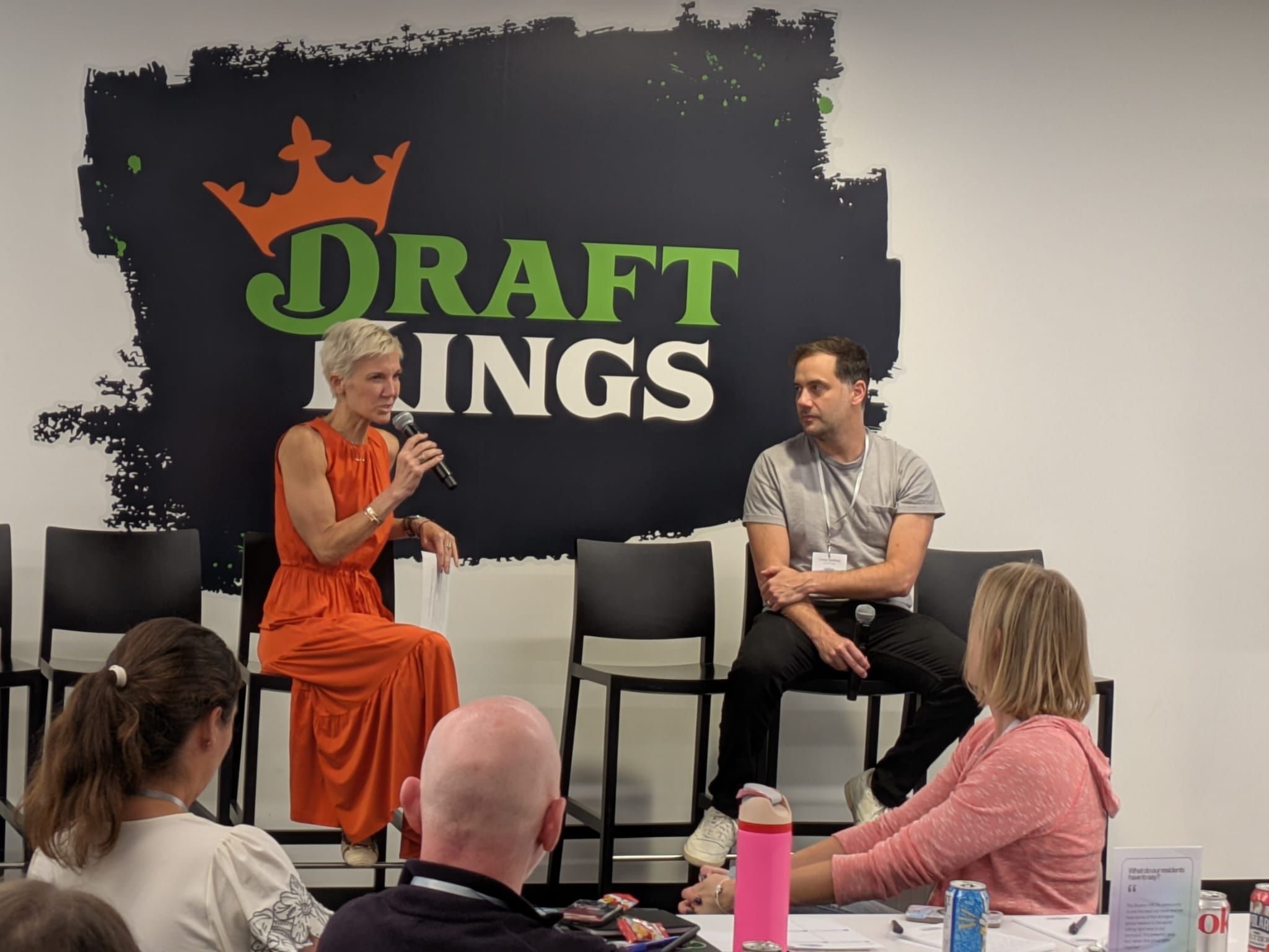
Mike Brown, Founder @ Door3 Talent hosted a panel with 3 thoughtful and inspiring panel members:
- Shannon Braley – Chief People Officer @ Forward Financing
- Jim Page – VP, Learning & Talent Development @ Metro Credit Union
- Sasha Katz Murphy – VP, Global Talent Acquisition @ Active Campaign
Getting senior leaders to step up and talk about what’s working and what is not with AI adoption is a tall order. The room was grateful to hear such honest accounts and plenty of provoking ideas along the way.
99 Problems but a Prompt aint one!
Mike has emerged as one of the most well-respected global thought leaders in AI for TA and People functions. As a former VP of Global TA himself, he has seen first hand how to build, deploy and train successful AI strategies across the People function.
He shared not one, but two killer builds with the room:
1) NextGen Job Architect
This is an AI-powered role architect that helps you:
- Audit existing roles for AI-readiness and hidden automation potential.
- De-risk workforce planning by identifying which tasks require “Human Always”
expertise. - Design technical infrastructure by generating custom system prompts for specialized
AI agents. - Future-proof your talent by mapping clear skill transitions from legacy “doing” to AI
“piloting”
2) Exec Team Simulator
This is an AI-powered simulation of your executive team that helps you:
- Surface objections before you walk into the room
- Test influence strategies before presenting
- Pre-wire stakeholders with the right approach
- Understand political dynamics and coalition-building
Workshop time
We broke out into small table groups to tackle 3 parts to this workshop:
1) Debate whether 10x’ ing the 10x’ers is a viable strategy + discuss what’s working / not working with our current approach
2) Assume that it 10x the 10x’ers has merit for a minute + tackle how to go about it
3) Make some bets where they would place their chips
10x the 10x’ers Concept
We started with modelling performance in a typical organisation.
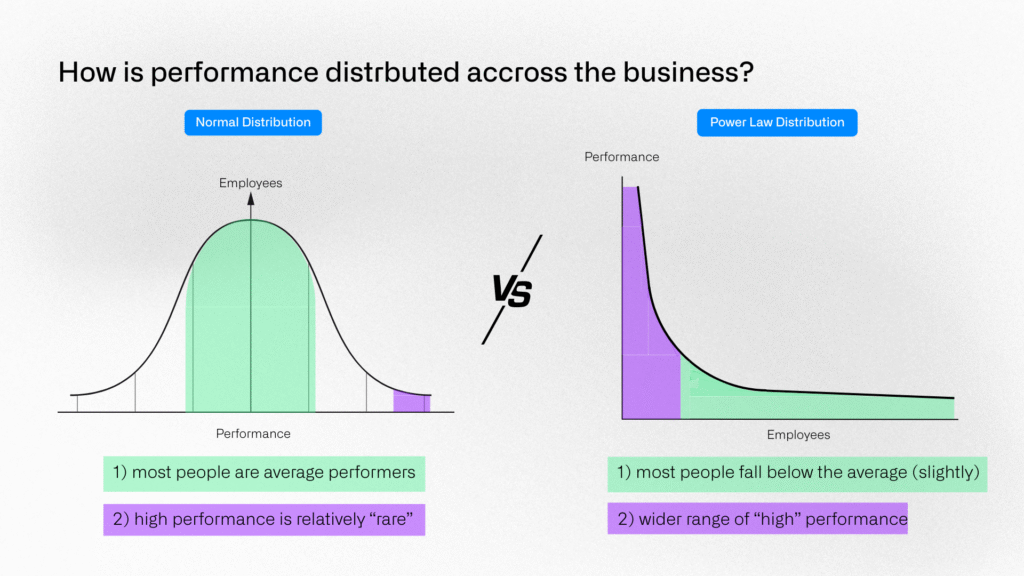
On the left you have the “normal distribution” or “bell curve”.
This is a common way for companies to think about their workforce. It is used for compensation reviews and all sorts. It has some significant flaws though and companies like Microsoft have famously ditched this way of thinking about performance.
It says:
1) most people are average performers
2) high performance is relatively “rare”
There is an article from Josh Bersin points to some academic research. Academic research that says the model on the left is not what happens in the real world.
In the real world the model on the right…. is actually how it plays out in 95% of cases. The “power law distribution” or “long tail” model.
So what’s the difference?
The first thing is most people are not average performers…. most people fall below the average (slightly). That’s quite interesting right? Everyone gets the same level of investment? Adoption of AI for all?
The second thing, is that the “power law” distribution says there is a much wider range of high performance. Including, the so say 10x’ers. This is all relative and in high performing environments, even the lowest performer is still awesome.
So we’ve taken that “long tail” model and thought a bit more about what might happen if we 10x the 10x’ers.
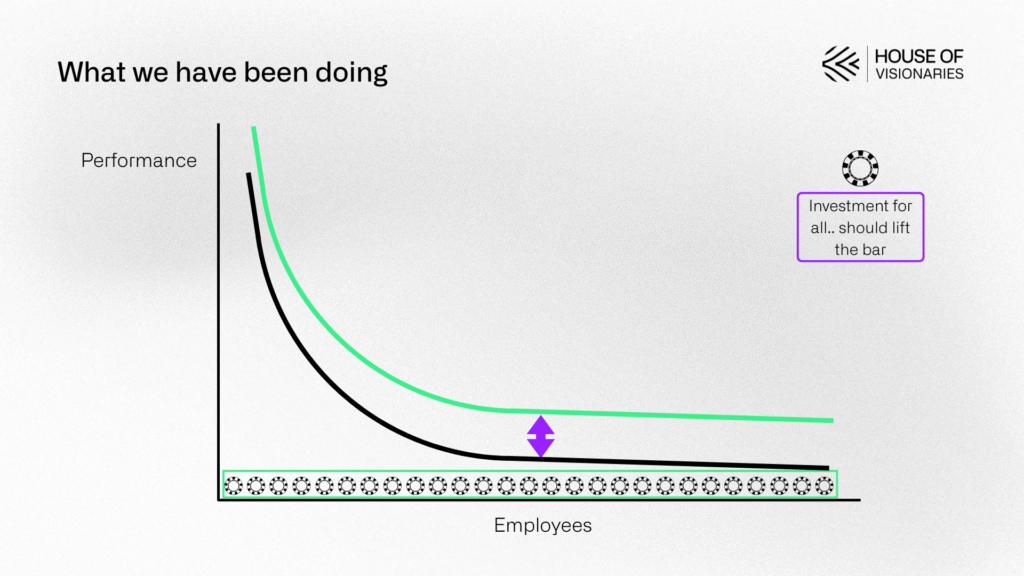
Investment in AI takes many forms, right.
L&D, enablement, comms, tools and technology… it all comes at a price and there are risk related investments too. Let’s call those investments, bets, poker chips. What we have been doing is evenly sharing these poker chips amongst everyone.
A bit of investment for all… should raise the bar. However, so far we are not typically seeing many businesses screaming about the ROI and improvements they have made in productivity and scale.
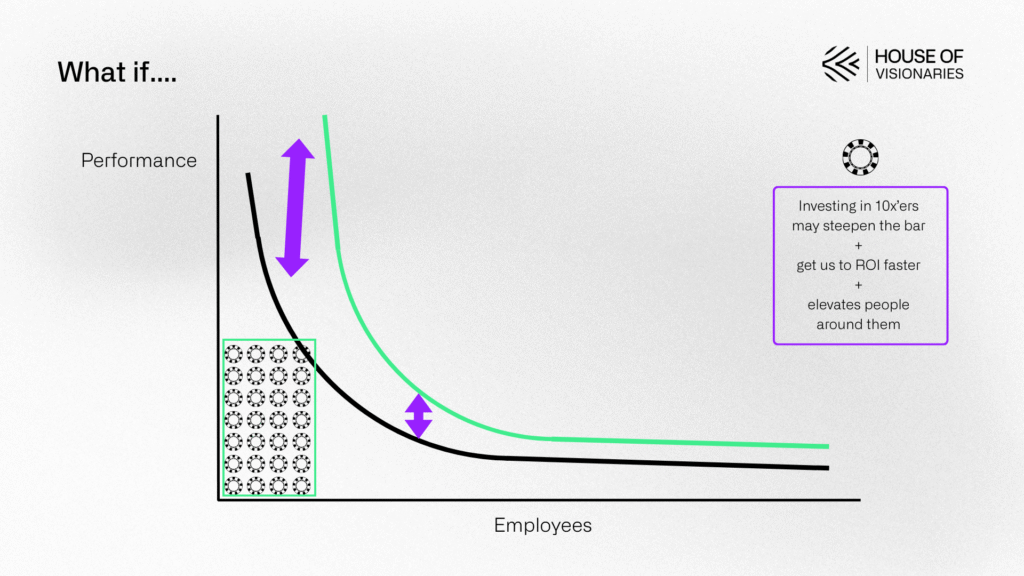
So what if…..?
What if we pooled those resources, put them in the hands of the highest performers. Could we see that performance curve steepen? Could we see a faster road to ROI? Through that momentum, do we get a secondary effect of this elevating people around the 10x’ers too?
So what if 10x’ing the 10x’ers has legs. How would you actually go about it? By it’s very nature it is not very egalitarian, how do you keep everyone else on board? What else would you need to think about? How would it work in practice?
These were concepts and Qs we asked of the room.
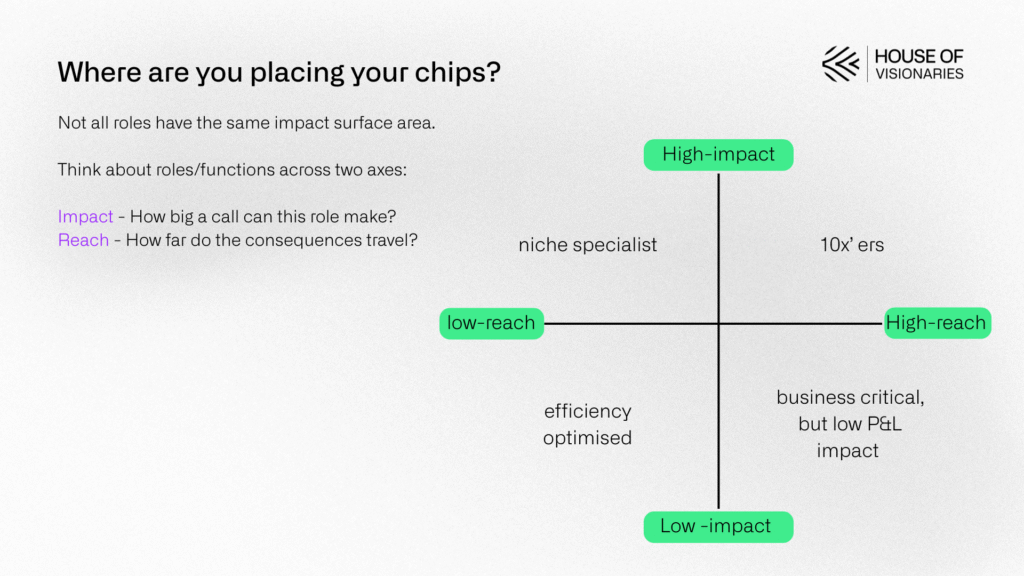
As senior leaders, with constraints, we have to make some bets, take some calculated risks.
Not all roles/functions have the same surface impact area. It’s all about Impact & Reach
Impact: How big a call can a role/function actually make?
Reach: How far do the consequences of that call travel?
Think about it. High impact and high reach are necessary precursors for10x performance. With the resulting quadrant across those two axis this is another way to think about high performance. As a final exercise we asked leaders to make some bets and debate what types of roles/functions would sit in each of the resulting quadrants.
Gain further inspiration
Co-created content from the HOV community.
This free smoke consists of inspiring podcasts, insights and tools to help you level up the game in TA and HR
We want to build a small but powerful community!
Refer someone great with below link